TripleScreenMethod.com
Sector Performance and the Presidential Cycle
CANSLIM.net (March '04 Issue)
Cycles abound in the market. From intra-day to mult-year, one can identify bullish and bearish phases that repeat often enough to be judged statistically significant. For example, thirty minutes after the market opens, most stocks reverse their trend; the year can be divided into six bullish months (Nov to Apr) and six bearish ones (May to Oct); from the 1880s to the 1990s, the fourth and fifth years of a decade have outperformed, while the seventh and tenth years have been under performers. More about cycles can be found in Larry William’s “The Right Stock and the Right Time” and Yale and Jeffrey Hirsch’s “Stock Trader’s Almanac.”In the November issue, I wrote about the bullish confluence of two such cycles: the six-month and Presidential cycles. Both result from economic trends that cause money to flow into the market during bullish periods. At the end of the year, annual bonuses are distributed; Christmas spending is massive; companies end their fiscal year and distribute dividends—mutual funds their capital gains; our paychecks increase after annual social security obligations are met; then in the beginning of the year, tax refunds are collected. During the pre-election and election years, the incumbent party does everything it can to increase the monetary liquidity needed to support a bullish market, then it’s easier to get reelected. But once elected, hard decisions are necessary to curb earlier inflationary policies. Often, interest rates begin to rise.
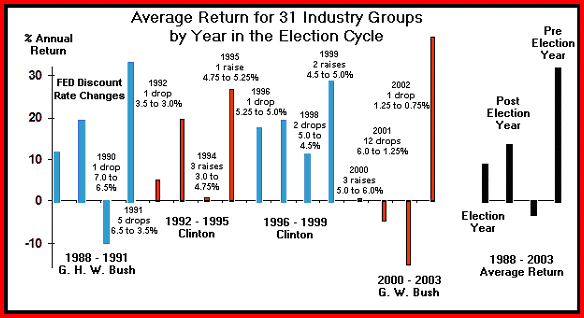
Consider the performance of 31 industry groups as they relate to the Presidential cycle, specifically, the last four Presidential terms. The goal is to identify groups that have performed better at various times in the cycle. The figure shows the annual returns for these 31 groups over the 1988 to 2003 years, as well as the overall average return partitioned by year in the cycle. Clearly, the pre-election year (last year) performed best in each term, while the middle years performed worse. The Fed policy, reflected in the discount rate changes, is also shown over the period. Remember too, we fought two gulf wars (Gulf War I began in January of ’91 and Gulf War II in March of ’03), and the business cycle had reached its latest trough (November of ’01 according to the National Bureau of Economic Research).
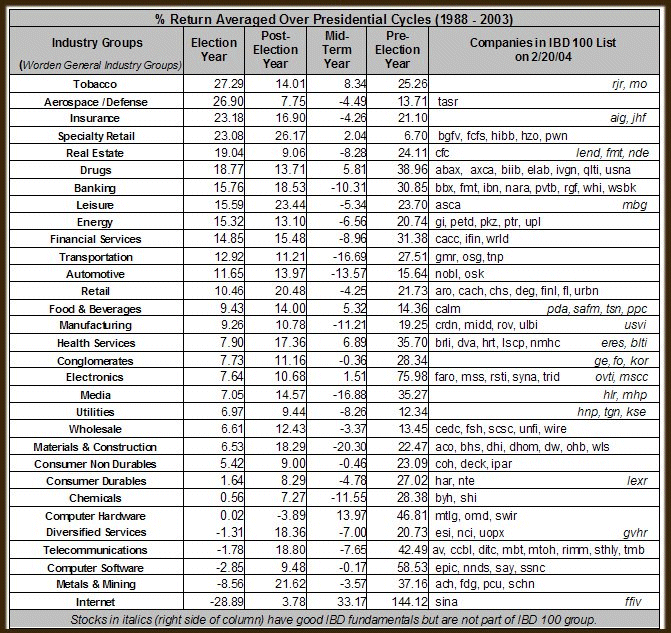
The table lists the average return over the Presidential cycle for each of the 31 major groups, as well as selected members within each group. Sorted by their return in the election year (this year), clearly Tobacco, Aerospace/Defense, Insurance, and Specialty Retailers all have historically performed well in the election year, as the leadership gets more defensive than the growth groups favored during the pre-election years. For example, internet stocks outperformed in the pre-election year, then rotated out of favor during the election year. While things may be different this time, as the tax cuts for capital spending will induce companies to increase capital outlay, it pays to be aware of these historic sector rotations.
Send an email to rmiller@triplescreenmethod.com.